What Defines a Top Employee Wellness Company in India? 10 Qualities Employers Should Look For
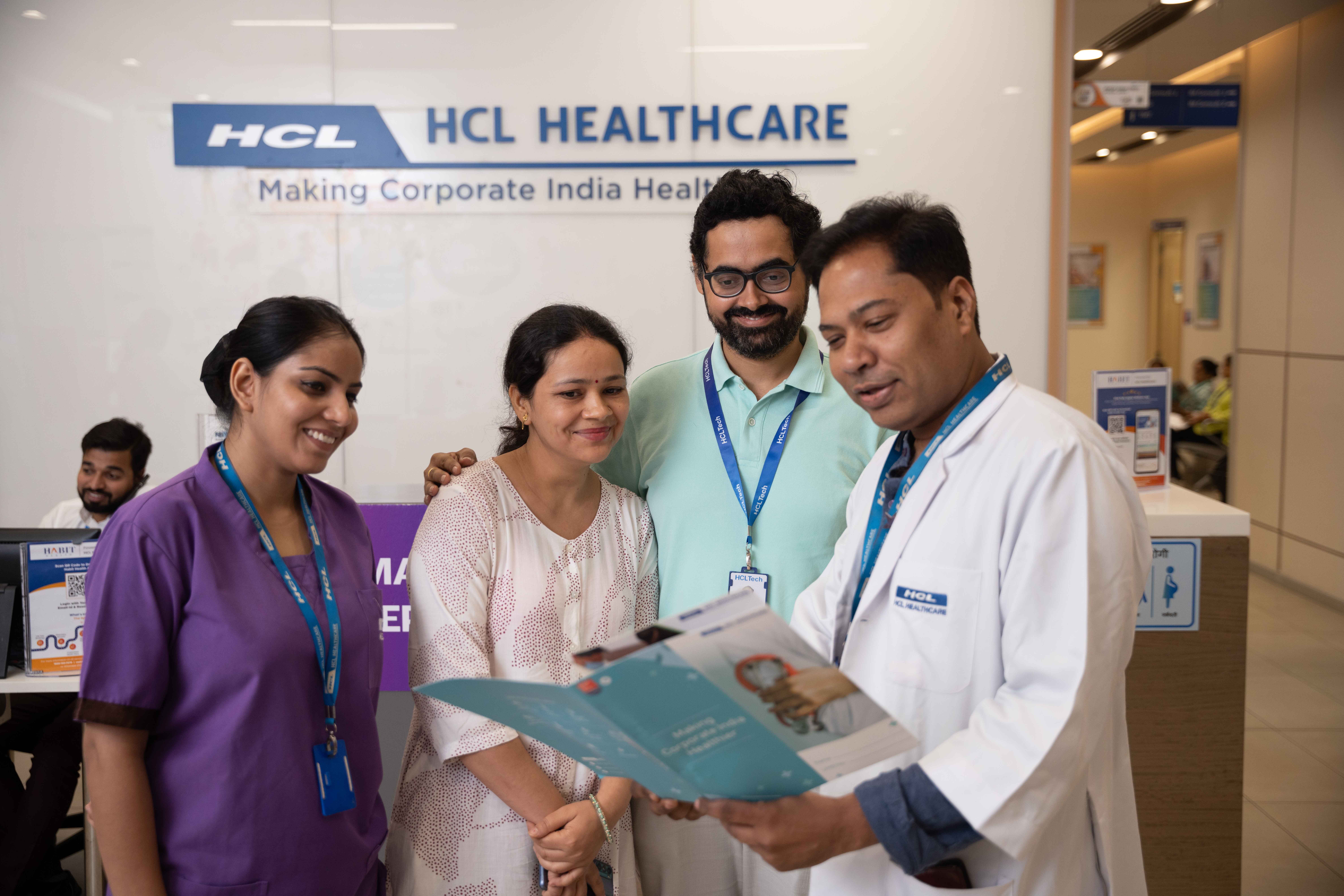
An HR head sits with three wellness vendor proposals open on her screen. All three promise holistic wellness. All three offer an app, a helpline, and a photo of employees doing yoga. The prices differ by lakhs, and nothing in the documents explains why. HR teams across India face this same problem every quarter.
The corporate wellness market in India projected to reach USD 4.07 billion by 2034, and dozens of vendors compete in it with nearly identical brochures. The real differences between a strong partner and a weak one usually appear only after the contract is signed, when it is too late to switch. These are the ten qualities that reveal those differences before you commit.
1. Doctors at the core
Ask the vendor to put you on a call with the doctor who will review your employees' abnormal reports. If that call cannot be arranged, the doctor does not exist in any way that matters. The top employee wellness companies India has produced are clinical organisations first and event managers a distant second.
2. Screening treated as the foundation
Watch how the first meeting opens. One vendor leads with a Zumba calendar and a steps challenge. Another asks for your workforce age profile and three years of claims data before proposing anything. The market has already picked a side: health risk assessment is now the largest service segment in India at a 22% share, per IMARC's 2026 analysis. You can only manage what you have measured.
3. Programs shaped to your workforce
A night-shift line at a Manesar plant needs anaemia screening, hearing checks, and fatigue management. A floor of 26-year-old developers in Koramangala needs lipid profiles, ergonomic care, and someone to talk to at 11 pm. A vendor who sends both the same package has designed for neither. A template arriving before the questions is the tell.
4. Confidentiality that survives pressure
The nightmare scenario is specific: a counselling summary surfacing in a manager's inbox before an appraisal. So test for it. Ask the vendor to walk you through their consent flow and show you exactly what the HR dashboard displays. If individual names appear anywhere outside the clinical team, walk. The moment employees suspect sessions travel upward, they stop booking them.
5. Follow-through on every finding
An employee's HbA1c comes back at 6.2, just over the prediabetes line. In a weak program, a PDF lands in his inbox and dies there. In a strong one, a doctor calls within the week, a diet plan follows, and the reading gets rechecked in ninety days. Same test, same cost, entirely different outcome. Ask every shortlisted vendor what happens after a red flag, and ask for the callback rate.
6. Continuity across the year
An annual camp is a photograph. A real program is a film: screening, monitoring, and intervention running all year, so a marker that starts drifting in February is caught in April rather than at next January's camp.
7. Reach beyond the head office
When one of India's largest public-sector banks extended a confidential counselling program to its 75,000-plus employees and their families in early 2025, the hard part was never the head office. It was the branch staff in small towns. Your workforce sits in Gurugram, Coimbatore, and at kitchen tables on video calls. Ask for the vendor's city coverage list and check it against yours.
8. Mental health inside the system
A helpline number laminated on a noticeboard is a bolt-on, and bolt-ons go unused. The stronger model connects counselling to the same clinical record and the same follow-up discipline as blood pressure, so the psychologist and the physician are treating the same person.
9. Data leadership can act on
A dashboard showing 61% participation is decoration. Useful analytics answer questions a CHRO actually asks: which unit's stress markers moved after the Q3 restructure, where hypertension is climbing, what changed in the ninety days after intervention.
10. One owner for the whole system
The failure mode has a familiar shape: the lab blames the platform, the platform blames the EAP, the EAP blames HR, and the employee gives up. A leading corporate wellness vendor India employers can rely on takes accountability end to end, tying screening, clinical care, mental health, and analytics into one coordinated model with a name attached to the outcome.
Conclusion
The stakes justify the diligence. The Live Laugh Love Foundation's December 2025 report estimates that improving workforce mental health and wellbeing represents an economic opportunity of up to USD 350 billion a year for India. That value goes to employers who choose on substance. Put these ten qualities in a column, put your shortlist in a row, and the identical brochures separate within an afternoon. To see what a clinically led partner looks like against the checklist, that is a reasonable place to begin.