What Are the Benefits of an Employee Assistance Program?
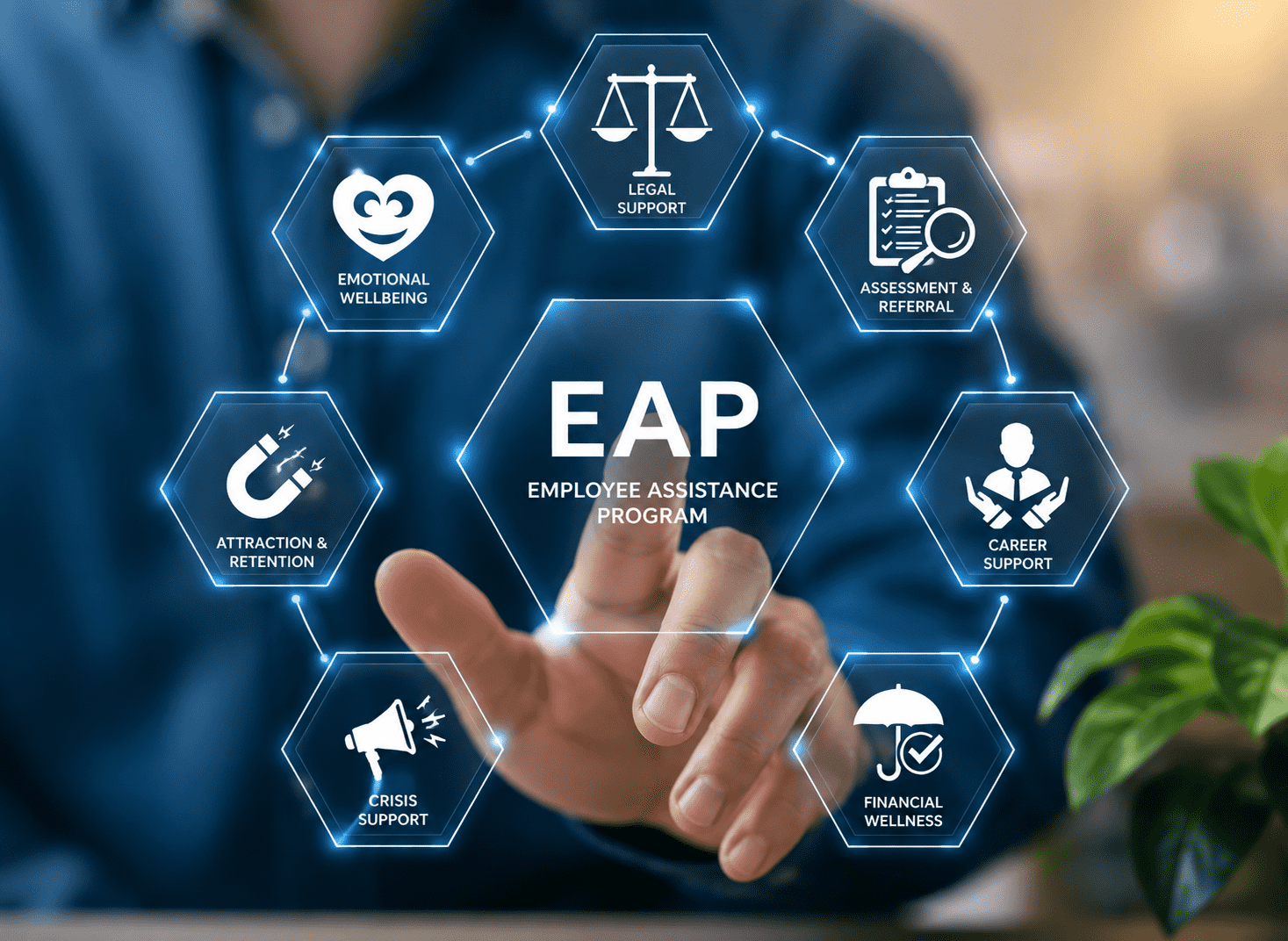
An Employee Assistance Program, or EAP, is one of those benefits that sounds dull on paper and turns out to matter enormously in practice. Stripped down, it's confidential access to professional support, counselling, mental health help, and guidance on the personal problems that quietly follow people to work. The benefits are easy to underestimate until you see what happens in a workplace that has one versus one that doesn't.
It catches problems before they become crises
Most struggles don't announce themselves. Someone carries anxiety, a family crisis, or early burnout for months before it shows up as a missed deadline or a sudden resignation. An EAP gives them somewhere to turn while the problem is still small. That early intervention is the single biggest benefit, because a worry addressed in week one rarely becomes the breakdown of month six.
It works because it's confidential
The whole thing hinges on privacy. When employees trust that what they say stays with the counsellor and never reaches their manager or HR, they actually use it. Strong employee mental health programs India companies adopt protect that confidentiality absolutely, because the moment people suspect it travels, the program dies on the vine. Trust is what turns an EAP from a poster into a lifeline.
It improves performance, quietly
This isn't soft reasoning. An employee distracted by an untreated worry is present but working at half capacity, and that hidden drain costs more than the occasional sick day. When people get help early, they focus better, snap at colleagues less, and stay engaged. The return shows up as lower absenteeism, lower attrition, and sharper output, even though none of it appears on a single line item.
It signals that the company actually cares
Benefits like this do something culture statements can't. They prove, rather than claim, that the organization sees its people as more than output. In a tight talent market, that signal matters. Employees notice whether real support exists, and it weighs on whether they join, stay, or leave.
It reduces the stigma around mental health
In Indian workplaces, admitting you're struggling still carries a cost. A well-run EAP, especially one paired with open conversations about stress and burnout, slowly normalizes the idea that mental health is something you're allowed to have. The best employee mental health programs India has to offer don't just provide counselling, they shift the culture around it.
It only works if the provider is serious
An EAP is only as good as the people behind it. A helpline nobody answers is worse than nothing. The right corporate EAP provider India companies trust brings clinical depth, genuine confidentiality, and real follow-through, the things that make employees trust it enough to pick up the phone. This is why choosing a capable corporate EAP provider India matters more than the brochure suggests. HCL Healthcare builds this kind of clinically led support into its workplace programs, combining counselling, mental health care, and early intervention into one coordinated system. The full scope is visible in their wellness offerings.
Conclusion
The benefits of an EAP come down to this: it catches problems early, keeps good people well and present, and proves the company means what it says about its people. Done seriously, with confidentiality protected and a capable provider behind it, it's one of the highest-return investments an organization can make in its workforce. If you want support that genuinely helps rather than decorates, look at what HCL Healthcare offers and start there.