The End of Static Health Reports: Why AI-Powered Smart Reports are the Future of Workplace
Every year, Arun, a mid-level employee in a large firm, undergoes a complete health checkup as part of his employer's corporate wellness initiative. What he is handed after those tests is a thick pile of papers filled with numbers — cholesterol levels, BMI scores and blood sugar markers — followed by a very brief consultation with a doctor. The journey, however, ends there. Although the information in the report may be valuable, Arun is left with more questions than answers.
What should he do next? Is he at risk?
Companies running corporate wellness programmes for their employees are sitting on vast collections of crucial health data — from preventive health checkups and diagnostic camps to wearable devices. However, without smart reports which help convert this data into simple, actionable plans, HR leaders may miss the critical opportunity to intervene early and improve the employee's health, overall productivity and life.
The problem, hence, is not the absence of data but rather the absence of intelligent interpretation and prioritization.
Limitations of Traditional Health Reports
Traditional health reports do little when it comes to converting numbers into decisions and interventions.
- Complex data without clarity. Multiple health parameters are often added to the traditional health report, providing the employee little clarity on the next steps and their long-term health risks and outcomes.
- Lack of prioritization. Multiple risks are presented without providing any clarity on what should be prioritized.
- No clear organisation insights. HR leaders receive fragmented data instead of cohort-specific data that can drive more personalized decisions.
- Low engagement. Traditional reports are static. They encourage very little engagement and follow-up action.
The result: valuable employee health data remains underutilized, and opportunities for early intervention are lost.
The Shift to Preventive and Predictive Health
With lifestyle-related risks emerging earlier in life, mental health concerns rising, and chronic conditions like diabetes and cardiovascular diseases becoming more prevalent, workplace health challenges have now evolved beyond providing just reactive support. The shift that is required involves being able to identify risks before they become diseases, use predictive intelligence to anticipate future health trends and risks, and deploy personalised interventions to address individual as well as cohort-specific needs.
From Static Reports to Health Intelligence
For years, employers have continued to provide annual health checkups, organise diagnostic camps and wellness initiatives for their employees. However, despite the abundance of data available, outcomes largely remain unchanged. Reports are often filed, read and forgotten. Decisions are often made in a reactive manner and many health risks may go unnoticed.
This paradigm, however, is undergoing a shift. Organisations are now moving from static health reporting to a dynamic health intelligence model. In a new era of AI-powered smart reports, how one understands, interprets and acts upon health data will transform — not only the state of reporting but also the way in which employers approach employee wellbeing, productivity and long-term outcomes.
Introduction to Smart Reports
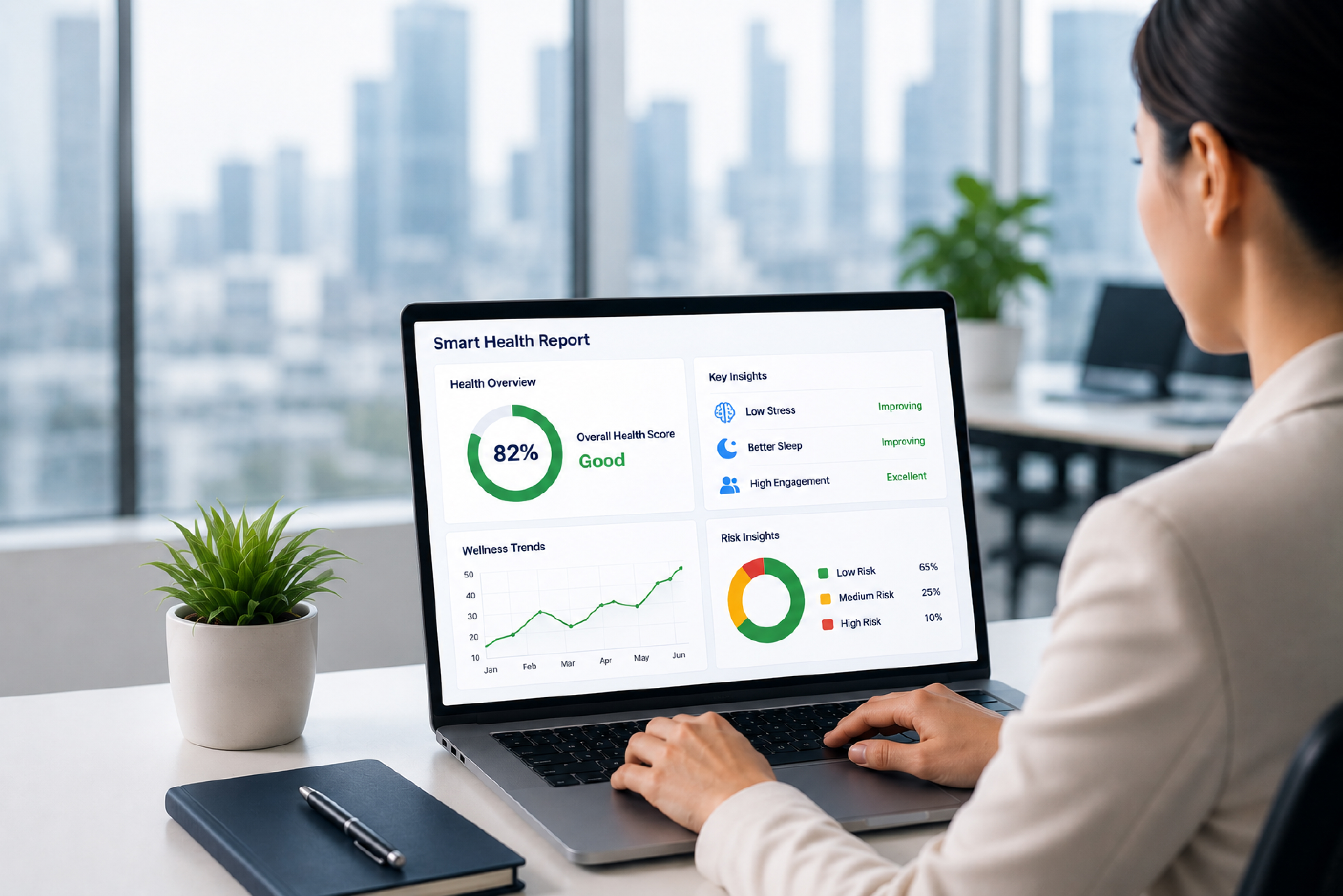
Now imagine an employee receives a smart report. Instead of receiving just numbers, they will now receive:
- A single, comprehensive health score
- Benchmarking done against their peers and others in the same age group
- Clear risk factors which help them identify future health concerns early
- Personalised recommendations tailored not only based on the employee's lifestyle but also based on their family history
Suddenly, their health is no longer an abstract concept — it becomes actionable, understandable and turns into a proactive journey. This conversion from data overload to clarity forms the root concept of smart reports.
Business Impact for Organisations
While smart reports can empower employees, they are equally beneficial for HR leaders, enabling them to act strategically. They can gain insights into health trends of employee cohorts, risks of oncoming issues (musculoskeletal issues, mental health issues, diabetes etc.) and even how engaged employees are in corporate wellness programmes. Using this, companies can move on from blanket programmes and provide more personalised wellness plans and targeted interventions.
For instance, ergonomics sessions can be organised to address musculoskeletal issues, the company cafeteria's menu can be changed to address rising cholesterol levels, and emotional wellbeing indicators can be used to address mental health concerns on time. The corporate dashboard can provide:
- Data-driven decisions at every level
- A benchmark against corporate India
- A boardroom-ready health narrative
- Targeted interventions, not blanket programmes
These insights can turn health data into a strategic tool for improving employees' health, performance and productivity.
The Future of Workplace Health
The future is not about just giving annual snapshots and health data but rather about continuous health monitoring. It is also about integrated systems that combine diagnostics, apps and analytics.
From providing traditional, static reports that are full of numbers but offer no clarity or guidance on what's next, employers must adopt the full potential of smart health reports and corporate dashboards to provide targeted and effective intervention or wellness plans for their employees.